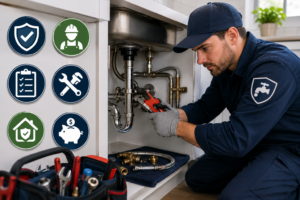
Why Certified Plumbers Matter: Protect Your Home with Licensed, Reliable Experts
Are you dealing with leaks, unexpected repair bills, or poor installations in your home? The importance of certified plumbers cannot be overstated, as they adhere to state codes and meet required training standards.
You will learn what certifications mean, how they protect your home, and how to pick a licensed plumber. Keep reading.
Why Hiring Certified Plumbers Matters
Hiring certified plumbers ensures your home meets all plumbing codes and safety standards. Their expertise allows them to tackle complex systems, preventing issues that could arise from improper handling.
Ensures compliance with plumbing codes and regulations
Certified plumbers follow local codes and safety standards. A licensed plumber files permits and passes inspections to meet code compliance and protect your property.
Certified credentials keep systems safe and work that lasts.
Code compliance reduces liability and keeps warranties valid. Property owners save money through fewer repairs and higher-quality workmanship.
Provides expertise to handle complex plumbing systems
Licensed plumbers plan and install complex plumbing systems for homes and businesses. They follow plumbing certification standards and local code compliance rules. Trained technicians diagnose multi-line leaks, water heaters, sewer lines, and commercial grease traps.
This expertise reduces damage and speeds repairs.
Plumbing infrastructure updates require precise measurements and the right materials. A licensed plumber uses quality workmanship during installation and maintenance. Owners save money over time through fewer failures and safer systems.
Contractors at Infinity Plumbing Services serve the Tulsa metro area with licensed crews and professional credentials.
Certifications and Training of Professional Plumbers
Professional plumbers undergo rigorous training and obtain certifications to ensure top-tier service. These credentials reflect their adherence to industry standards and commitment to ongoing learning in plumbing practices.
Licensing requirements and industry standards
Licensing protects property owners and ensures safe, code-compliant work.
Requirement | Who It Affects | What It Covers | Why It Matters | Local Note |
State License | Homeowners, renters, commercial owners hiring pros | Proof of competency, legal permission to work | Reduces liability; ensures code adherence | Check the Oklahoma Construction Industries Board for Tulsa rules |
Journeyman | Plumbers who perform installations under supervision | Basic plumbing tasks; required exam and experience | Confirms trained skill level for common repairs | Often follows an apprenticeship of multiple years |
Master Plumber | Contractors who design and supervise complex jobs | Large installations, permitting, code interpretation | Offers greater accountability for major projects | May require additional exams and documented work hours |
Apprenticeship & Hours | Aspiring plumbers and employers | On-the-job training plus classroom hours | Builds practical skill and reduces error rates | Typical programs span several years |
Permits & Inspections | Property owners and contractors | Local permit filings and official inspections | Prevents unsafe installs and code violations | Failure can cause fines and forced rework |
Codes & Standards | All plumbing professionals | IPC, UPC, local amendments, and health rules | Standardizes safe materials and installation methods | Inspectors enforce these at final approval |
Insurance & Bonding | Clients and contractors | Liability insurance and performance bonds | Protects owners from damage and incomplete work | Ask for proof before work starts |
Continuing Education | Licensed plumbers and employers | Class updates, code changes, new tech | Keeps skills current and compliant | Some states require periodic CE credits |
ensing protects property owners and ensures safe, code-compliant work.
Requirement | Who It Affects | What It Covers | Why It Matters | Local Note |
State License | Homeowners, renters, commercial owners hiring pros | Proof of competency, legal permission to work | Reduces liability; ensures code adherence | Check the Oklahoma Construction Industries Board for Tulsa rules |
Journeyman | Plumbers who perform installations under supervision | Basic plumbing tasks; required exam and experience | Confirms trained skill level for common repairs | Often follows an apprenticeship of multiple years |
Master Plumber | Contractors who design and supervise complex jobs | Large installations, permitting, code interpretation | Offers greater accountability for major projects | May require additional exams and documented work hours |
Apprenticeship & Hours | Aspiring plumbers and employers | On-the-job training plus classroom hours | Builds practical skill and reduces error rates | Typical programs span several years |
Permits & Inspections | Property owners and contractors | Local permit filings and official inspections | Prevents unsafe installs and code violations | Failure can cause fines and forced rework |
Codes & Standards | All plumbing professionals | IPC, UPC, local amendments, and health rules | Standardizes safe materials and installation methods | Inspectors enforce these at final approval |
Insurance & Bonding | Clients and contractors | Liability insurance and performance bonds | Protects owners from damage and incomplete work | Ask for proof before work starts |
Continuing Education | Licensed plumbers and employers | Class updates, code changes, new tech | Keeps skills current and compliant | Some states require periodic CE credits |
Ongoing education and skill development
Ongoing education and skill development keep certified plumbers up to date with the latest industry practices. These efforts ensure that they remain compliant with safety regulations and plumbing standards.
- Certified plumbers participate in regular training sessions to learn about new tools and techniques. This hands-on approach allows them to stay informed about innovations that can improve their work quality.
- Continuing education helps plumbers understand changes in plumbing codes and regulations. Keeping current ensures they meet all compliance requirements for safety and effectiveness.
- Professional plumbers attend workshops and seminars. These events often cover emerging trends, best practices, and problem-solving strategies for common plumbing issues.
- Many licensed plumbers pursue advanced certifications throughout their careers. Earning these credentials demonstrates commitment to professional growth and a dedication to delivering high-quality workmanship.
- Ongoing education fosters a culture of safety among plumbing professionals. Knowledgeable plumbers are better equipped to identify potential hazards, enhancing overall safety for homeowners, renters, business owners, and property managers.
- Skill development sessions focus on improving essential plumbing skills, including installation, maintenance, and repair. Plumbers gain experience through practical exercises designed to refine these important abilities.
- Participation in specialized training programs can lead to expertise in specific areas like water efficiency or eco-friendly installations. This specialization enables certified plumbers to provide valuable services for home renovation projects.
- Networking opportunities arise from ongoing education initiatives within the plumbing community. Connecting with peers can lead to shared knowledge and insights that benefit the entire industry.
- Engaging in continuous learning empowers certified plumbers to provide better service for their clients. Homeowners and business owners alike benefit from their enhanced skills and understanding of modern plumbing systems.
- Finally, investing time in education leads to higher client satisfaction rates by improving service outcomes from skilled tradespeople who take pride in their professionalism and quality workmanship.
Benefits of Choosing a Certified Plumber
Choosing a certified plumber guarantees quality workmanship and safety. These professionals follow strict regulations, ensuring your plumbing operates efficiently and lasts longer.
High-quality workmanship and safety assurance
Certified plumbers ensure high-quality workmanship in every project. Their training helps them meet the latest safety standards. They follow plumbing codes and regulations diligently.
This compliance protects your home from potential hazards.
Hiring a licensed plumber for installation or repair enhances the reliability of your plumbing infrastructure. With their expertise, you can avoid costly mistakes often made during DIY plumbing attempts.
Professional plumbers also conduct thorough inspections to safeguard against future issues, providing peace of mind for homeowners and business managers alike.
Long-term cost savings and reduced risks
Professional credentials help protect your budget and property.
Audience | Summary Points |
Homeowners & Renters |
|
Business Owners & Property Managers |
|
Common Cost Examples |
|
Hiring Actions |
|
Conclusion
Hiring certified plumbers gives you peace of mind. They understand plumbing codes and safety standards. Their training ensures high-quality workmanship for your home. You also save money in the long run by avoiding costly repairs.
Avoid expensive repairs and unsafe work—choose professionals you can trust.
Contact us today to schedule your certified plumbing service and get fast, dependable, code-compliant solutions for your home!