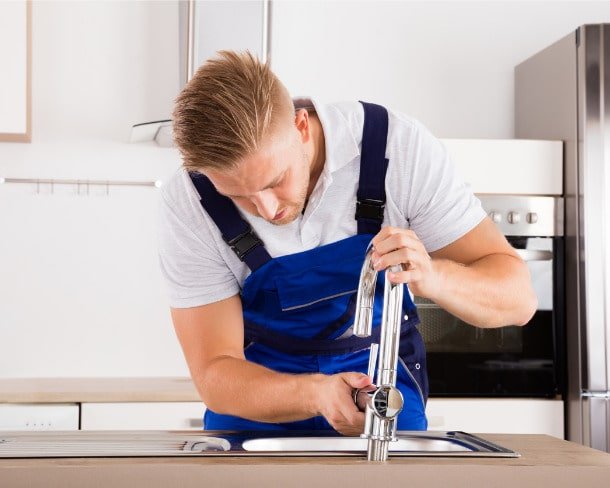
Most tankless water heater problems trace back to mineral scale, a fault code, or an ignition fault, and the fix is usually far cheaper than a new unit. Infinity Plumbing handles tankless water heater repair in Tulsa the right way. We read the error code, descale the heat exchanger, check the gas and venting, and get your hot water back. Call 918-258-1818.
Tankless heaters are built to last longer than a tank, but they’re more sensitive to hard water and to a botched install. When one stops behaving, the cause is usually specific and fixable. This page covers the problems we see most in the Tulsa area, when a repair makes sense over a replacement, and how to keep yours from failing in the first place.
Tankless units fail in a handful of predictable ways. Knowing the pattern helps you describe it on the phone and helps us arrive with the right parts:
Sort out which one you’re dealing with and the repair path gets clear fast. Below are the ones that send people looking for help most often.
One thing that separates tankless from an old tank is the display. When something’s wrong, the unit usually shows a fault code instead of just quitting. That code is the manufacturer telling you which sensor or condition tripped, whether that’s ignition failure, a flame-loss fault, overheating, a flow issue, or a venting problem.
The catch is that the same code means different things across brands, and clearing it without fixing the cause just brings it right back. We read the code against the unit’s own service data, confirm what’s actually failing with a live test, and repair that, rather than resetting the display and calling it done. If you can see a code on the screen, jot it down before you call. It shortens the diagnosis.
No hot water is the symptom, not the cause, and on a tankless unit there are a few usual suspects. The most common in the Tulsa area is scale buildup on the heat exchanger, which we’ll cover below. Beyond that, we check the gas supply and pressure, the igniter and flame sensor, the flow sensor that tells the unit to fire, the power supply, and the venting, since a blocked vent will shut a gas unit down on purpose.
If your unit is throwing a code alongside the cold water, that narrows it quickly. If it’s silent and simply not heating, we work through the same checklist in order. Either way, a tankless with no hot water is worth a same-day look, and if you’re stuck with a cold house on a freezing night, our emergency plumber in Tulsa line is answered around the clock.
Oklahoma has hard water, and hard water is rough on tankless heaters. Every time the unit fires, minerals in the water bake onto the heat exchanger. That scale acts like a blanket, forcing the burner to work harder, dropping your hot-water output, tripping error codes, and eventually cooking the exchanger if it’s left alone.
The fix is a descale, sometimes called a flush. We isolate the unit at its service valves, circulate a descaling solution through the heat exchanger to dissolve the buildup, flush it clean, and clean or replace the inlet filter screen while we’re in there. A unit that’s throwing scale-related codes often comes right back to full output after a proper descale. Skip this maintenance for years and the scale can do permanent damage, which pushes a fixable unit toward replacement.
The cold-water sandwich is that quick shot of cold water you feel a few seconds into a shower, right after someone else just used hot water. Here’s why it happens: the leftover hot water in the line reaches you first, then the cold slug that was sitting in the pipe arrives, and finally the freshly heated water catches up. On a tankless unit there’s a brief lag while the burner fires and comes up to temperature.
A little of this is normal to how tankless works, so it isn’t always a fault. When it’s severe or getting worse, though, it can point to a flow sensor issue, scale slowing the response, or a unit that’s undersized or poorly configured for the home. We can check whether yours is normal behavior or a real problem, and where a recirculation setup makes sense, we’ll tell you.
Most of the time, repair wins. Tankless units are built to run 15 to 20 years with care, so a heater in the middle of its life with a bad sensor, an ignition fault, or heavy scale is almost always worth fixing rather than tossing.
Replacement moves into the conversation when the heat exchanger itself has failed or corroded, when the unit is near the end of its life and repairs are stacking up, or when years of skipped descaling in our hard water have done damage that a flush can’t reverse. If you’re genuinely at that point, or you’re thinking about upgrading, our tankless water heater page for Tulsa covers new units, sizing, and installation. And if you’re actually running a standard tank rather than a tankless, water heater repair in Tulsa is the page you want. We’ll always steer you to the smaller fix when it’s the right one.
A tankless unit is a compact system of gas, electronics, sensors, and venting packed into a small wall-mounted box, and it doesn’t forgive guesswork. Reading fault codes correctly, testing gas pressure, servicing the burner and flame sensor, descaling the heat exchanger safely, and confirming the venting is sound all take training and the right tools.
This is also why a handyman or a general repair person is the wrong call here. Gas work is regulated for good reason, and a mistake on the gas or venting side can put carbon monoxide into your home. We’re a family-owned local plumber, licensed for gas work in Oklahoma, and our techs work on these units regularly instead of once in a while. If you want the full picture of what we cover, start with our Tulsa plumber overview.
Most tankless repairs we run are preventable, and the prevention is simple: service it once a year. In our hard water, an annual descale is the single most valuable thing you can do to keep the unit healthy. It clears the scale before it can trip codes or damage the heat exchanger, and it keeps your hot-water output where it should be.
A yearly service visit also cleans the inlet filter screen, checks the burner and igniter, confirms the venting and combustion air are clear, and verifies gas pressure. Homes on especially hard water may benefit from a water softener or a scale-reducing setup ahead of the heater, which stretches the time between descales. Stay on top of maintenance and a good tankless unit will outlast two or three tank heaters.
It depends on what’s actually wrong, so any flat phone quote is a guess. A descale sits at the low end. A failed flow sensor, igniter, or flame sensor costs more because of the part, and a repair that turns out to need a new heat exchanger is a bigger job we’ll talk through with you first.
What we promise instead of a fake number: you get an upfront, written quote before any work begins, the diagnostic is a clear line item, and there are no surprise add-ons at the end. Financing is available if you’d rather spread a larger repair, and you can book right on Housecall Pro. You’ll know the number before we pick up a tool.
We’re a family-owned and operated plumber that has served the Tulsa area for more than 8 years, and our customers rate us 4.8 stars across more than 260 Google reviews. We back the work with upfront written pricing, financing, online booking through Housecall Pro, and 24/7 emergency service for the nights a tankless quits and the house goes cold. Tankless repair is exacting work, and we treat it that way: read the code, prove the cause, fix it right, and test before we leave.
We repair tankless water heaters across the Tulsa metro, including Tulsa, Broken Arrow, Bixby, Jenks, Owasso, and Sand Springs, and out to Coweta, Sapulpa, Glenpool, Claremore, and Catoosa. Not sure whether you’re in range? Call and we’ll tell you straight.
We work on the common residential tankless brands and models. Because each brand codes its faults differently, we diagnose against the unit’s own service data rather than guessing. If you can read the model number and any code on the display before you call, it speeds up the visit.
Once a year in the Tulsa area, because Oklahoma’s hard water builds scale quickly. A home on especially hard water may need it more often, and a water softener ahead of the unit can stretch the interval. Annual descaling is the best way to avoid most tankless repairs.
It can be, and it shouldn’t be ignored. The code tells us which sensor or condition tripped, from ignition and flame faults to overheating or a venting problem. Clearing the code without fixing the cause just brings it back. Note the code and call, and we’ll read it properly.
Not always. A brief shot of cold water between hot bursts is normal to how tankless heaters work. If it’s severe or getting worse, it can point to a flow sensor issue, scale, or a sizing problem, and we can check which it is.
Yes. We run 24/7 emergency service, so if your tankless fails and you’ve got no hot water, call 918-258-1818 any hour and a licensed tech will respond.
Most tankless units run 15 to 20 years, so a mid-life unit with a bad sensor or heavy scale is usually worth repairing. Replacement makes sense when the heat exchanger has failed or years of skipped maintenance have done damage a descale can’t undo. We’ll give you an honest read either way.
Get an upfront written quote and a real diagnosis from a licensed local crew that works on tankless units every week. Call 918-258-1818 or book online, and if you’re not sure whether it’s a repair or a replacement, tell us the code and the symptoms and we’ll help you sort it out. You can also reach us through our contact page.
Call 918-258-1818 to schedule your tankless water heater repair, or Book Online anytime.
Infinity Plumbing Services
12254 E. 60th St., Tulsa, OK 74146
918-258-1818 · 24/7 Emergency Service